◔
Pressure keeps changing
A rising or falling gauge can suggest a pressure-control, expansion, or water-loss problem.
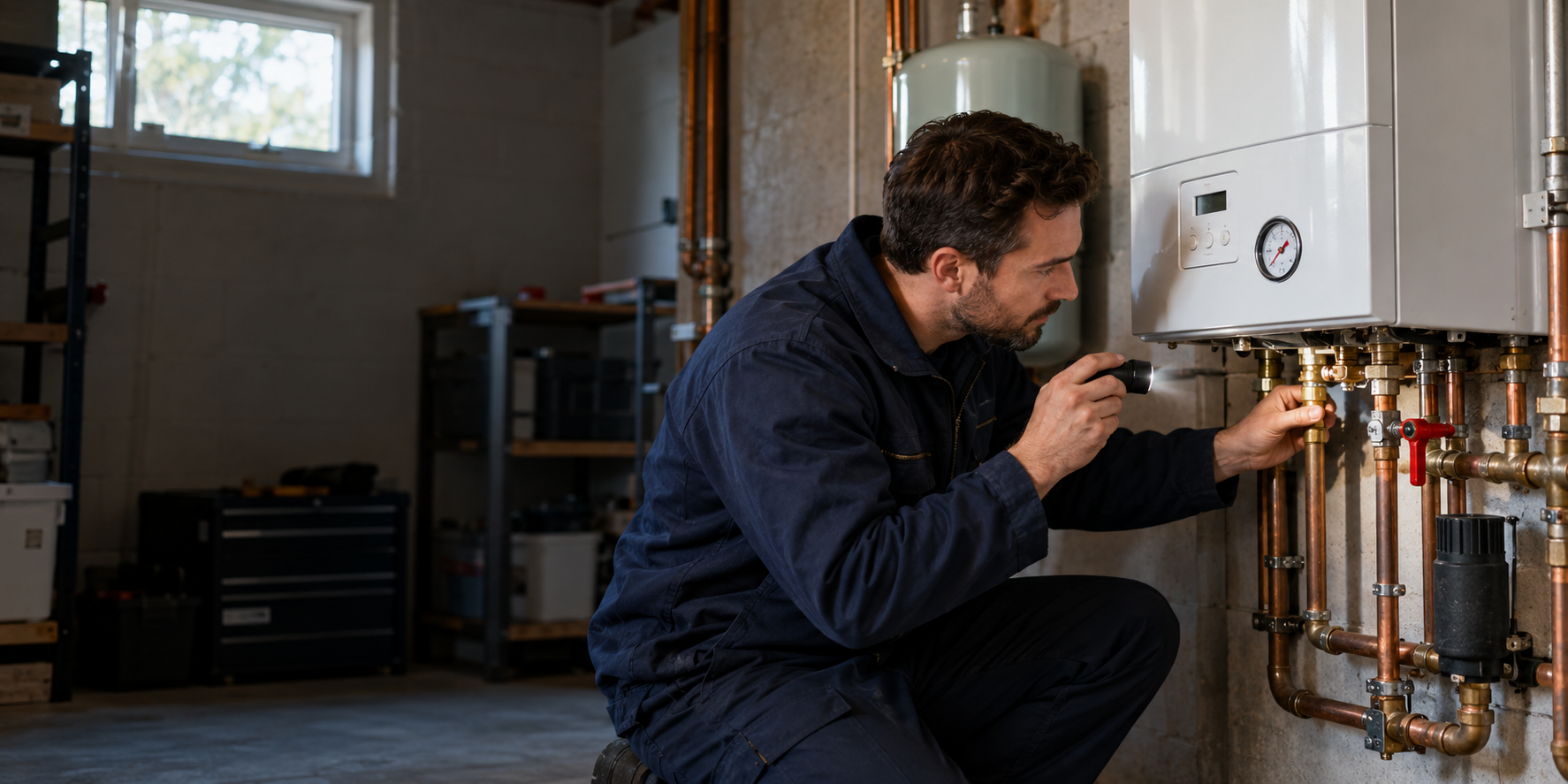
Boiler leak repair
A boiler can leak from a pressure relief valve, pump seal, pipe joint, heat exchanger, or internal component. The right response starts with the source and the system condition.
Know the signs
In your home, water around the boiler deserves attention even when heating still works. The pattern of the leak can help a professional narrow the cause.
A rising or falling gauge can suggest a pressure-control, expansion, or water-loss problem.
Heat and pressure can expose failing seals, valves, and joints that stay dry when the system is cool.
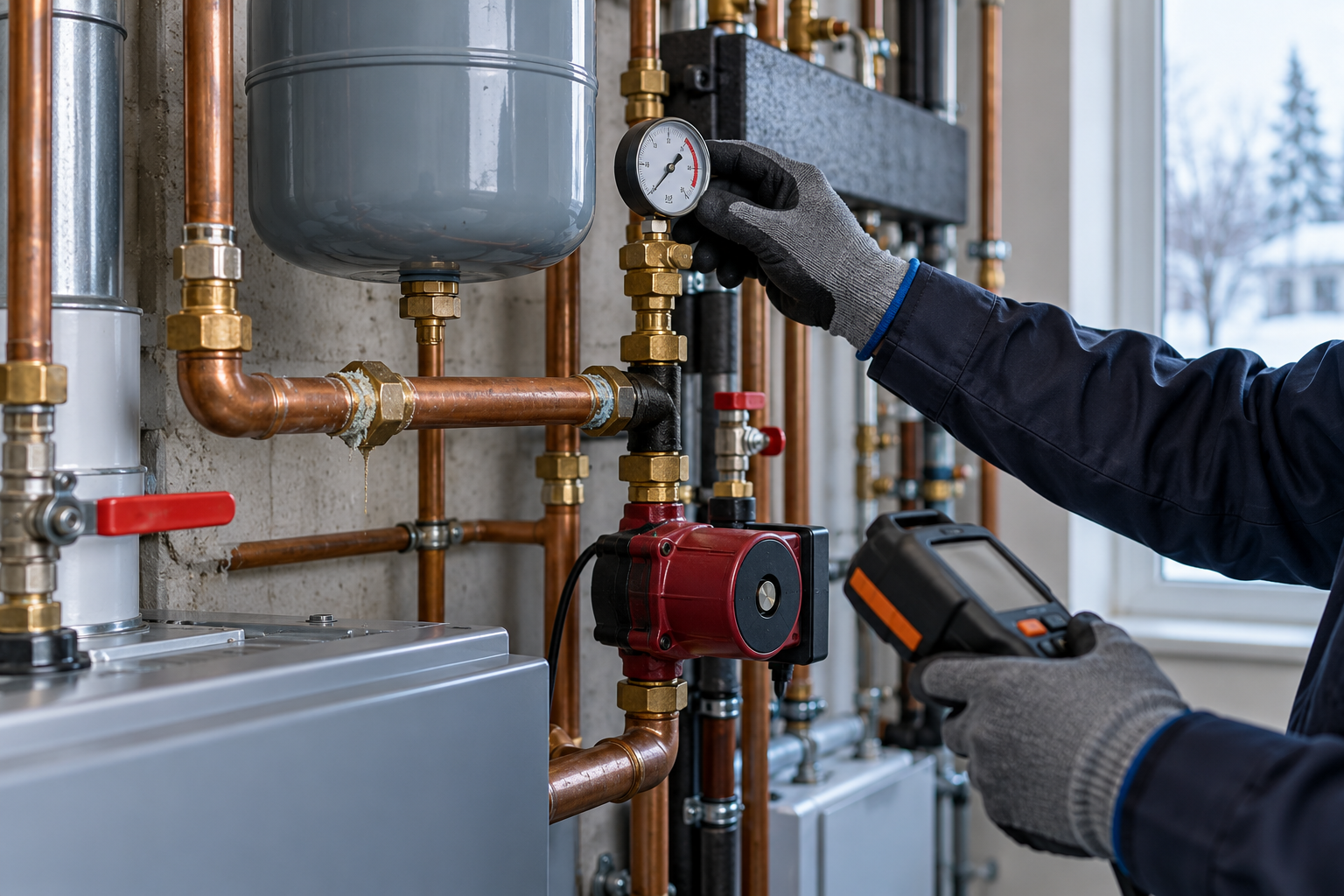
Rust, mineral deposits, and water marks often show where a slow leak has been developing.
Common sources
The visible puddle does not always sit directly below the failed part. Water can travel along pipework and casing before it drips.
A relief valve may discharge when pressure rises beyond the system’s normal range.
Aging seals can allow slow weeping that becomes a steady leak as the system cycles.
Corrosion, movement, or a failed joint can release water around connected pipework.
Water inside the casing may point to a heat exchanger or another internal component.
Loss of expansion capacity can make pressure swing sharply as the water heats.
In colder climates, exposed or poorly protected lines can split after freezing.
What a visit may include
For a boiler leak in your area, the technician may inspect the pressure gauge and visible connections, compare the leak when the system is cold and hot, and isolate components before recommending work.
The exact inspection and repair depend on system type, access, condition, and local provider practices.
Act safely
Leave the immediate area and contact the appropriate emergency service or utility if you smell gas, see smoke, or suspect combustion fumes. Keep clear of steam, very hot water, and wet electrical parts.
For a minor cool-water drip, use the normal controls to turn the boiler off only when they are dry and safe to reach. Do not remove the casing or repeatedly refill a leaking system.
Read the leak response guide ↗How coverage works
The site keeps the path focused on one service and one location check.
Open the your area location page or browse the full filtered coverage directory.
Compare the property ZIP with the codes shown on the city page.
Note the source, pressure reading, system status, and any safety concerns so availability and job fit can be assessed.
Repair scope
A visible drip does not reveal the complete job. Ask for the diagnosis, included parts, labor, testing, and any exclusions in writing before work begins.
An exposed fitting is usually easier to reach than a component behind the casing or concealed pipework.
Valve, pump, vent, heat exchanger, and expansion-vessel work involve different parts and procedures.
Corrosion, repeated pressure loss, prior repairs, and the boiler’s age can affect the recommended scope.
Tight mechanical rooms, seized valves, and systems that cannot be isolated can add time.
The job may include refilling, bleeding radiators or zones, checking pressure, and confirming the leak is stopped.
After-hours availability and cold-weather demand can vary by provider and location.
Common questions
Common sources include pressure relief valves, pump seals, pipe joints, corrosion, and expansion-vessel problems. An inspection is needed to identify the actual source.
Many leaks come from serviceable valves, seals, pumps, or pipework. Internal corrosion or heat-exchanger damage may require a larger repair or replacement decision.
Even a slow leak can reduce pressure, damage nearby materials, and worsen. It should be checked promptly, especially if water is hot, the pressure changes sharply, or electrical parts are wet.
Avoid opening the casing or applying sealants to an unknown source. Boiler systems combine heat, pressure, water, electricity, and sometimes fuel, so diagnosis and internal repair should be handled by a qualified professional.
Browse the filtered service area and check the ZIP codes listed for your location.